

The Phoenix of 1962: Forging Strategy and Strength from the Scar of Defeat


The war between India and China in 1962 is regarded as a very important event in the modern history of India up until now. It was an extremely poor military defeat for the country. However, that conflict was nowhere near the fault of the Indian army. It was a raging storm of political, anticipating, and logistical mishaps. The war turned out to be a strong, painful catalyst. India turned the harsh lessons into a challenge, thereby starting an institutional reform that changed the country’s defence posture.
Each of the marks that the country got in 1962 became the initial blueprint for the current power. India learnt, rebuilt, and now it commands its northern borders with those two characteristics – unmatched willpower and cutting-edge technology – and no other power can match it. The current transformation has been so enduring that India has not suffered a single military setback against China since that defeat.

The Scarring Prelude: Political Blunders and Unmatched Valor in 1962
A Crisis of Command: The Failure of Political Foresight
India came into the conflict of 1962 without being prepared at all. The political leadership was completely off in their estimation of China’s real intentions. The nation’s rulers were being very naïve by placing political trust in the unrealistic concept of brotherhood. This ignorance resulted directly in the very negative impact on intelligence and preparedness that eventually decided the outcome of the war.
General V K Singh, the Former Army chief, referred to the loss as “a kick which woke us up”. The Indian government of the time did not use the necessary diplomatic channels to get the neighbouring country’s intent. Instead, the government’s lack of military preparedness made the troops very vulnerable. The Indian army could not be better equipped or prepared since they were so unprepared. They had no other choice but to rely on their morale and determination to fight for the country.
The Intelligence Blind Spot: Colonial Legacy and Strategic Lapse
The defeat exposed a profound structural weakness in India’s security apparatus. Before 1968, the Intelligence Bureau (IB) handled both internal and external intelligence. This centralized, inherited colonial system proved utterly incapable of tracking sophisticated external threats, especially the large-scale military mobilization by China.
China operated with superior intelligence, knowing exactly where Indian troops stood. India’s intelligence apparatus failed completely to detect the movement of Chinese troops from one area to another. This failure exposed the forces to attack, catching them “in a manner in which no any military would like to be”. This comprehensive foreign intelligence failure provided the critical impetus. Prime Minister Jawaharlal Nehru subsequently instructed the establishment of a dedicated foreign intelligence agency. The lesson was clear: structural, centralized intelligence collection could not secure a modern nation against complex external threats.
Unmatched Courage: The Unbroken Will of the Indian Jawan

The military leadership of the country lost the war tactically, but the Indian soldiers’ will remained rock solid. The troops displayed incredible and unshakable valour, battling the enemy in their strong-ways even though the odds were against them.
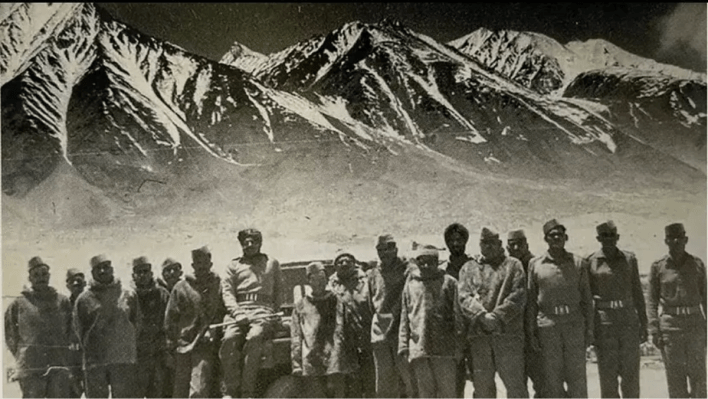
Rezang La defence has become a historical reference point to the valour of Indian armies. Nearly 120 men from Kumaon Regiment held their ground against the sea of Chinese soldiers. Major Shaitan Singh was awarded Param Vir Chakra posthumously for his commanding and daring gestures during the battle. The fight is still recognised as a modern battlefield example of last stand.

Indian troops fought the same scenario at Walong, turning the battle into a defining moment of heroism and sacrifice in the eastern sector. They held their ground in an extremely difficult environment where a well-equipped enemy surrounded them and cut off all supply routes in the mountain valley. The Indian defence forces delayed the Chinese invasion significantly, showcasing extraordinary bravery. The Indian soldiers fought marvelously; the war was lost not because of their courage but due to impatience at the higher command levels.
Rebuilding the Foundation: Institutional Reforms from the Ashes
The traumatic experience of the war led to drastic and deep-rooted changes in the armed forces. India marked its security and infrastructure forces to be the ones in charge of the always ready borders.
The Shield of External Security: Birth of R&AW
The huge intelligence blunder resulted in very quick rectification measures. The drawbacks brought out in 1962, along with the 1965 war, compelled the government to take a major decision. So, in September 1968, India set up the Research and Analysis Wing (R&AW).

Setting up R&AW became a turning point in the strategy. The secret service had the sole claim to intel gathering, and terror fighting as well as secret operations. It replaced the country’s defensive, unspecialized intel-gathering method with a highly skilled and proactive spying doctrine. R&AW reports directly under the Prime Minister. It soon became an efficient tool of the Indian national power that embraced foreign policy counselling and waging of unceasing guerrilla wars as per the ideas of the ancient strategist Kautilya.
Guarding the High Frontiers: The Formation of ITBP
It was very clear that a dedicated, specialized high-altitude border police force was needed and it was needed brutally. The Indo-Tibetan Border Police (ITBP) was set up right after the war by India.

The ITBP was concerned with controlling the rugged, high-altitude frontier. This unit acquired the precious unique mountain war fighting techniques, and it held the title of ‘Himveer’ family in its blameless service to the nation. ITBP personnel no longer just control the Line of Actual Control (LAC); they also secure critical infrastructure projects built by associated organizations, demonstrating the adoption of an integrated security approach.
Forging the Northern Lifelines: Mandate and Expansion of the BRO
In 1962, India paid a heavy price for logistic paralysis. The troops could not get the food, equipment and reinforcements they needed on time. The war made India realize that all-weather infrastructure was a primary military asset in high-altitude conflict. The Border Roads Organisation (BRO) saw a huge expansion of its mandate and a big change in its post-1962 priorities in the war situation.
The BRO carries out significant operations, making roads, bridges, and airstrips even in line-of-fire areas. Due to severe environmental constraints and security problems, the private sector usually stays away from these sites. The most vital thing is that the government has placed the BRO in the Order of Battle of the Armed Forces. With this decision, the BRO is allowed to be a military force multiplier, and hence its support will be ensured in the event of any conflict. The BRO’s Chetak and Yojak projects are responsible for the construction and maintenance of major mountain arteries such as the Rishikesh-Badrinath road and the building of modern high-altitude tunnels like the Atal Tunnel. This institutional change over the years has turned infrastructure development from a civilian convenience into a national security mandate.
Mastering the Mountain Battlefield: Logistics and Warfare Evolution
India initiated a rapid, massive overhaul of its military doctrine, logistics, and air assets, specifically tailoring its power projection capabilities for high-altitude mountain combat.
Strategic Depth: The Expansion of Mountain Divisions
The Indian army saw the importance of having the right people and the right training for such a purpose. After 1962, the army decided to increase the number of its mountain warfare units and, eventually, assigned six divisions to mountain warfare. The whole process was the army’s way of assuring that there would be good acclimatization of troops, availability of special equipment, and production of a doctrine suitable for such an environment.

At present, India is one of the countries with the largest number of mountain warfare troops in the world. This complete and well-established capability is of great interest to the world. Soldiers from nations such as the UK, US, and Russia often train and hold joint manoeuvres using Indian Mountain Warfare training system models. The establishment of a dedicated Mountain Strike Corps is yet another way of demonstrating this commitment to the high-altitude war fight in the long run.
Air Power as the Strategic Lever: Transforming IAF Capability
The decision not to deploy the Indian Air Force’s (IAF) flying wing in the 1962 conflict with China remains one of the most debated aspects of the war. Many analysts argue that India’s refusal to launch its jet fighters- driven largely by unfounded fears- was a major strategic mistake. Had the IAF deployed its fighters at high altitudes to strike the exposed Chinese positions, India could have exploited the enemy’s vulnerable ground situation and significantly reduced its own casualties.
India certainly took the bitter pill and learned the lesson. The air wing of the Indian military (IAF) soon became a strong modernized airlift fleet to get rid of the mountain’s logistical constraints. Even during the 1962 war, the IAF used An-12s to fly in two troops of AMX-13 tanks to Ladakh.

The IAF’s transport and helicopter fleets are now carrying out extensive air maintenance operations at high altitude. They carry over 30,000 tonnes of load annually from the plains to high-altitude posts, performing critical intra-theatre transfers and supporting infrastructure development partners like the BRO. Recognizing the need for forward projection and resilient supply chains, India built or revived numerous Advanced Landing Grounds (ALGs) along the LAC. For example, the Fukche ALG in Ladakh, built shortly before 1962, was fully revived in 2008. These operational ALGs ensure immediate access for transport and fighter support, mitigating the strategic paralysis that characterized the 1962 debacle.
Mobility and Readiness: Adapting to Extreme Terrain

Military planning had identified that only technological solutions would not work for the Himalayas. Effective use of helicopters and traditional mechanization was very much limited by extreme weather, heavy snow, low visibility, and thick vegetation above 12,000 to 13,000 feet.
India’s strategy, thus, adopts a hybrid method. Airlifts are the mainstay for India, but the country still realizes that big military operations in this rough terrain will take not only but also physical endurance and tactical mobility. Successful action rests on the turning of the enemy’s defences by infiltrating Special Forces followed by rapid communication links. This practical doctrine thereby allows for the necessity of high-altitude troop capacity, specialized training, and modern mechanized and aerial assets.
Every Scar a Strategy: Asserting Authority Post-1962
The comprehensive reconstruction proved its worth through direct encounters. After 1962, India never faced military defeat against China, at least that was the case in terms of the long-term success of the change in both the institutional and the operational spheres.
The Defining Reaffirmation: Nathu La and Cho La (1967)

Just five years after the cessation of hostilities with China, India at the Sikkim could exhibit its newly acquired capabilities during the 1967 Nathu La and Cho La incidents. This conflict gave the first indubitable proof of the reforms after 1962.
The Indian army, making use of the tactical high-ground advantage and better military readiness, commenced powerful shelling. They not only brought down Chinese defences but also delivered heavy casualties to the People’s Liberation Army (PLA). India’s power to thwart the attacks and keep controlling the area decisively was a great victory. This incident was a significant uplift to the morale of the country, decisively reestablishing India’s trust in its border defence capabilities. The 1962 strategic defeat had been righted through the 1967 demonstration of tactical and operational superiority.
The Tri-Junction Stand: Doklam (2017)
The 2017 Doklam confrontation was a test for India’s determination to resist the unilateral Chinese territorial aggression. China tried to construct a road in the contested tri-junction region which was a threat to stability in the area.
India responded with firm and decisive military support for Bhutan by directly confronting the Chinese construction activity. The Indian Army unit not only blocked China from upgrading the road but also acted swiftly before the harsh Himalayan winter set in. This denial of access served two key purposes: it reaffirmed India’s commitment to its regional ally and demonstrated India’s operational readiness to counter China’s attempts to alter the status quo through gradual infrastructure expansion.
Holding the Ground: The Tenacity of Galwan (2020)
The Galwan Valley incident was a test for the Indian Army’s new doctrine of assertive, forward defence. Not denying the number of enemy troops was less and taking the temperature of over 8 thousand feet but still, Indian soldiers showed their fierce tenacity and bravery.

The Indian Army’s positions were defended so well that the Chinese advance was stopped along with heavy losses inflicted on the PLA which resulted in a crucial tactical victory for the Indian Army. This tactical victory, however, was not merely a victory in concert, but it also held great strategic value. The brave Indian soldiers, with Colonel Santosh Babu at the front, could have simply stayed quiet and the result would have been that the Chinese Army would have built an observation post looking over the vital Darbuk–Shyok–Daulat Beg Oldi (DS-DBO) road. This road connecting the sensitive Daulat Beg Oldi sector serves as India’s lifeline in terms of logistics, and the action taken by India was to protect this vital asset, which consequently directly challenged the Chinese ‘might is right’ principle along the LAC.
The Vanguard of Modern Preparedness: Technology, Willpower, and Self-Reliance
India maintains a state of permanent, comprehensive readiness along the LAC, integrating advanced technology and focusing on defence indigenization to secure future advantage.
The Future Frontier: Integrating AI, Drones, and Autonomous Systems
India already recognizes that algorithms, autonomous systems, and artificial intelligence will dominate future battlefields. The Indian Ministry of Defence allocates a significant portion of its budget to modernizing drone technology, developing anti-drone systems, and advancing quantum computing and directed-energy weapons.
Technology has greatly improved logistics in high-altitude conditions through innovations like the Indian Army’s Air Orca logistics drones, which can deliver payloads at altitudes above 12,000 feet. These systems now ensure crucial last-mile supplies to troops—mitigating one of the extreme logistical challenges that the forces faced during the 1962 war.
In addition, advanced surveillance capabilities now reinforce the old saying, “an army that is aware is an army that cannot be defeated.” Newly installed radar systems in the Himalayas detect moving targets through sophisticated techniques like Doppler Filtering, which distinguishes motion from static ground clutter. Multi-beam scanning allows simultaneous tracking of threats, while clutter suppression eliminates false echoes from the rugged landscape. This comprehensive surveillance capability eliminates the intelligence blindness that handicapped India six decades ago.
Indigenisation and Strategic Depth
India is at the forefront of the growing trend towards indigenisation and self-reliance, and the country has termed this shift as the “from dependence to confidence” transition. The Innovations for Defence Excellence (iDEX) program is providing massive backing for hundreds of new tech companies, that not only crack up the technological gap but also guarantee that India can turning foreign technologies into the best-suited ones for its own rare problems and if needed even maybe the case of the foreign countries.
Government’s buying from Indian sources has gone up remarkably which reflects the intent of the government to support the establishment of a strong defence industrial base in the country. This technological independence is very helpful in getting the military closer to the heart of the country as it helps in the very tricky power game between the countries by keeping the supply lines and cutting down the area’s vulnerability to the geostrategic politics.
A Comparative View of Transformation
The shift from 1962 to the current posture is comprehensive, affecting every aspect of military operation.
The transition of India from the weaknesses of 1962 to the strong position on today’s Line of Actual Control (LAC) is among the most significant defence transformations in its history. India has redefined its strategy, infrastructure, intelligence, logistics, and combat doctrine through the hard-earned lessons of the 1962 India-China war. Those lessons also reshaped and strengthened every aspect of the nation’s military preparedness.
India back then had the very poor infrastructure to support its troops because of the road networks and few airfields as well as the limited logistics. The troops were completely cut off and suffered from the lack of support with logistics being very thinly spread across the extremely difficult and harsh terrain. The Border Roads Organisation (BRO) has constructed a wide high-altitude road network linking even the most remote outposts. Advanced Landing Grounds like Fukche and the new tunnelling project are now making it possible to have the movements and reinforcements across border sectors done quickly and all year round.
India’s intelligence architecture has undergone an equally revolutionary transformation. In 1962, the all-rounder Intelligence Bureau had to cope with a reactive and disunited approach that eventually led to the awareness of the situation to be lost completely. The Research and Analysis Wing (R&AW) and the specialized military intelligence units, however, have access to the most sophisticated surveillance systems like the Doppler radar filtering, and the clutter suppression, which guarantees proactive situational awareness throughout the entire Himalayan region.
The areas of logistics and mobility have witnessed total transformation. India has shifted from reliance on marching columns and restricted transport back in 1962 to being capable of airlifting more than 30,000 tonnes of goods at high altitude per year. Specialized logistics drones like Air Orca support the supply missions, while mountain divisions ensure mobility aligns with combat readiness.
Military planners have evolved mountain warfare doctrine, replacing acclimatized, scattered troops with the modern Mountain Strike Corps – specifically trained for high-altitude combat and equipped with advanced artillery and precision systems tested under conditions such as Nathu La.
The most indicative transformation perhaps lies in the response capability of India. India has replaced the hesitation and paralysis of 1962 with assertive confidence, demonstrated at Doklam (2017) and Galwan (2020). India now places itself at the borders with the combination of technological strength and strategic foresight—an impenetrable barrier that no amount of questioning can overcome.
Summarizing, India has successfully turned each of the 1962 weaknesses into a strength. Reacting defensively has given way to deterrence proactively. The wounds of the past have moulded India into a military machine that is there today—the scars make it fully prepared, and resilient, and it is also determined not to give in when it comes to its sovereignty.

One Comment